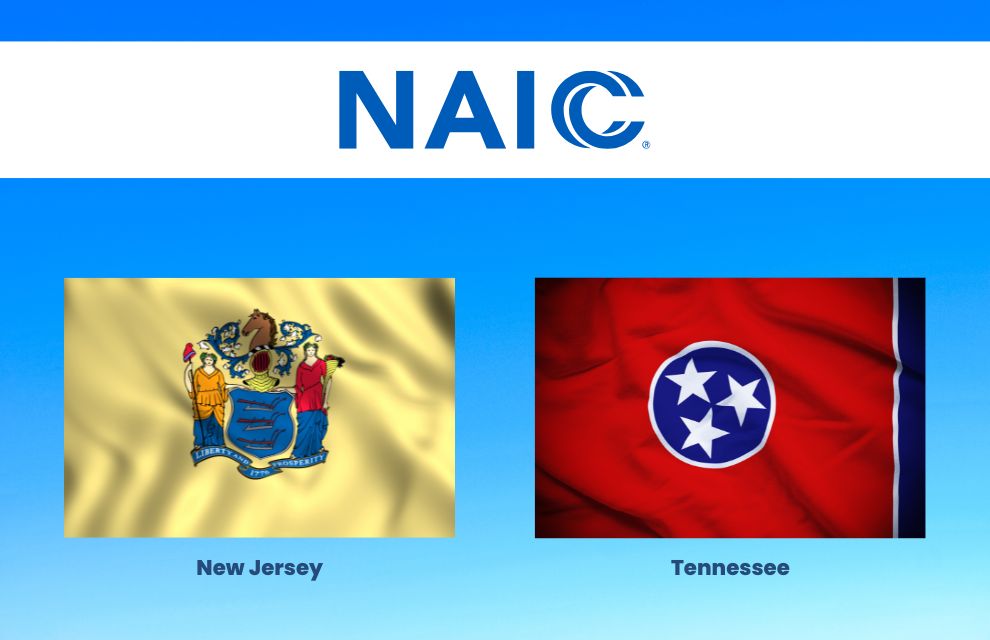
The National Association of Insurance Commissioners (NAIC) Financial Regulation Standards and Accreditation (F) Committee has voted to accredit the insurance regulatory departments of New Jersey and Tennessee.
The decision was announced during the 2026 Spring National Meeting of the NAIC in San Diego, California. Accredited insurance departments undergo a comprehensive, independent review every five years to ensure they meet financial solvency oversight standards.
The NAIC accreditation programme demonstrates that state insurance regulatory departments meet standards of solvency regulation and provide effective regulation of multistate insurers. This allows non-domestic states to rely on the accredited domestic regulator to fulfil a baseline level of effective financial regulatory oversight.
To become accredited, a US state or territory insurance regulatory department must submit to a full on-site accreditation review by a team of independent consultants. These consultants evaluate capabilities across several areas, including financial solvency laws and regulations, financial analysis and examination capabilities, and organisational and personnel practices.
The review also covers primary licensing, re-domestications and change of control of domestic insurers. These factors are particularly relevant to the captive insurance industry, as both New Jersey and Tennessee are prominent US domiciles for captive structures.
For a state insurance regulatory department to remain accredited, an accreditation review must be performed at least once every five years, with interim annual reviews. If necessary, key areas for improvement may be provided to the state, and an interim follow-up may be required.
The NAIC provides expertise, data and analysis for insurance commissioners to effectively regulate the industry and protect consumers. The US standard-setting organisation is governed by the chief insurance regulators from the 50 states, the District of Columbia and five US territories.
Through the NAIC, state insurance regulators establish standards and best practices, conduct peer reviews and coordinate regulatory oversight.